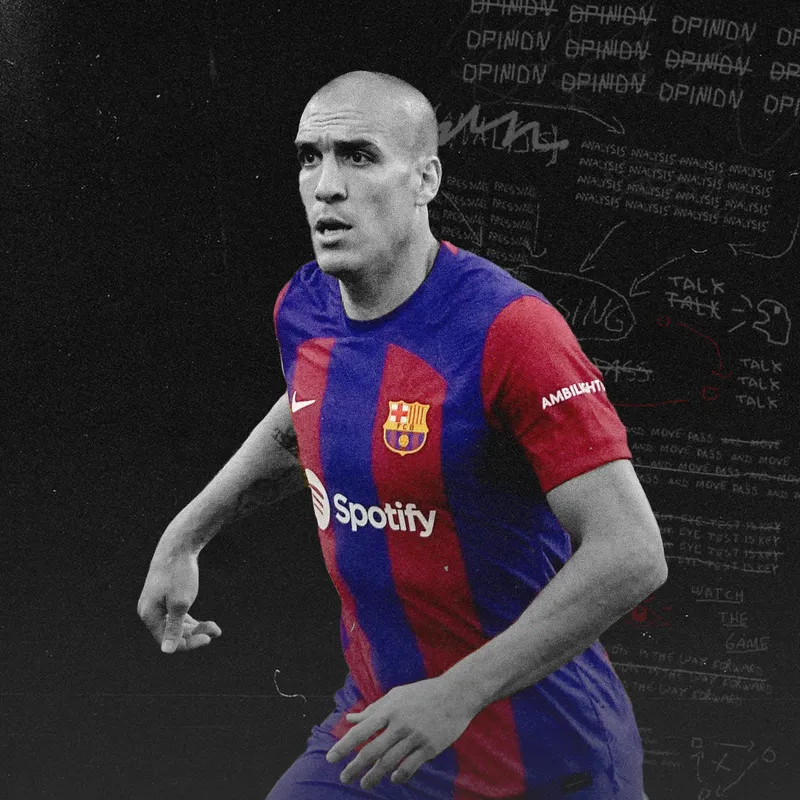
Illustrator Gabriel Foligno Photographer Sam Hodde Publication Getty Images
Oriol Romeu: Barcelona's Short-term Successor to Sergio Busquets?
After emerging through the ranks of a prestigious club and subsequently playing at a mid-table team for years, it is hard to find your way back to the elite level. This challenge is primarily rooted in the prevailing assumption that your…
After emerging through the ranks of a prestigious club and subsequently playing at a mid-table team for years, it is hard to find your way back to the elite level. This challenge is primarily rooted in the prevailing assumption that your capabilities are known already, with people judging you for not making it at the elite club in the first place.
It is an unconscious bias that a lot of football stakeholders carry, from executives to coaches to fans. There is also an assumption that if you were really that good, you would not have stayed at the level you did for so long. This underlying perspective has significantly influenced the perception surrounding Oriol Romeu and the recent discussions about him.
For a player who excelled so well at a stable club, in what has clearly been the best league in the world for years, it is quite remarkable how little credit or hype Romeu gets. Even considering the bias mentioned earlier, one would still expect him to get plaudits for his work – perhaps not the kind declaring him a fit for the elite level, of course. Then again, that should not surprise anyone, should it?
After all, what is sadly a key issue with modern football fandom is actually what makes Romeu who he is. Many struggle to relate with quiet consistency or find any allure in it, because it is unremarkable and dull. They want flashes of brilliance, headline grabbers, screamers, nutmegs, compilation material that can go viral, the football equivalent of rap verse “quotables” or as we sometimes say it, “they want a vine footballer”. All of these things, Romeu is not.
Credits
Words
Astorre S. Cerebróne