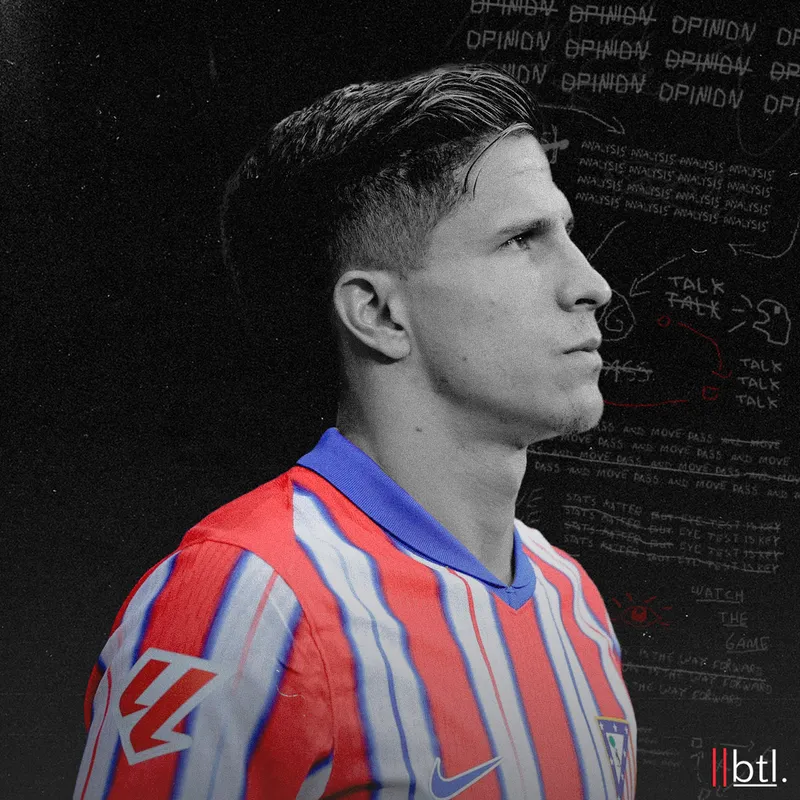
Illustrator Gabriel Foligno Photographer Soccrates Images Publication Getty Images
The Club World Cup and the End of Tactical Colonization
The sky turned red. The heavens bled crimson. And the earth darkened beneath its weight. On the day PSG dismantled Inter Milan 5-0 in the final of the UEFA Champions League, something ancient broke. What remained of Inter wasn’t a team—it…
The sky turned red. The heavens bled crimson. And the earth darkened beneath its weight. On the day PSG dismantled Inter Milan 5-0 in the final of the UEFA Champions League, something ancient broke. What remained of Inter wasn’t a team—it was debris. Tactical dust scattered across the pitch, their legacy crumbling before our eyes.
As the ashes cooled, Brazilian football philosopher Joszef Bozsik wrote what would become the most searing postscript in modern tactical writing. He titled it, simply: Post-Human Football. He wrote: "Football has always been an odyssey, a sport that invites chaos, surprise, the unforeseen, the demonstration of human incompleteness... But PSG? PSG is not football as we once knew it.”
Bozsik drew a line. On one side: football as life—fluid, unpredictable, communal. On the other: football as automation, a mechanical ballet where spontaneity is replaced by simulation. Where Achraf Hakimi doesn’t move with instinct but by instruction. Where Ousmane Dembele’s position at the base of play is not a jazz note, but a barcode. To the untrained eye, it looked like expression. But for the attentive? It was memory. Drilled, coded, recalled. A choreography mistaken for conversation.
This is not just a tactical evolution. It is a philosophical mutation.
Credits
Words
Tobi Peter